China has become a major source of automated vehicle-washing equipment, serving operators across Asia, Europe, Africa, and the Americas. This guide introduces ten manufacturers associated with the country’s Automated Car Wash industry. It considers equipment design, manufacturing capacity, export experience, and service support.
A reliable comparison should examine more than polished factory photos. Buyers need to check wash speed, brush materials, drying performance, water-recycling systems, and electrical safety controls. A busy site may process dozens of vehicles daily, so weak sensors or slow maintenance can quickly increase operating costs. Supplier communication also matters. Clear manuals, spare-parts availability, installation guidance, and responsive technical teams often separate a dependable partner from a low-cost seller.
The list is not an absolute verdict. Market rankings can change with product updates, regional certifications, customer feedback, and after-sales performance. Some manufacturers may excel at gantry systems, while others focus on tunnel lines, touchless units, or compact solutions for fuel stations. Real-world evaluation remains essential. Ask for recent project references, test wash videos, factory documentation, and transparent warranty terms. A demonstration can reveal details that brochures hide, such as uneven drying or difficult maintenance access. Small details matter.
This overview aims to support informed research rather than promote one universal choice. Each manufacturer should be assessed against local vehicle sizes, climate conditions, water availability, traffic volume, and budget. Careful verification is still required. That is where many purchasing decisions become imperfect.
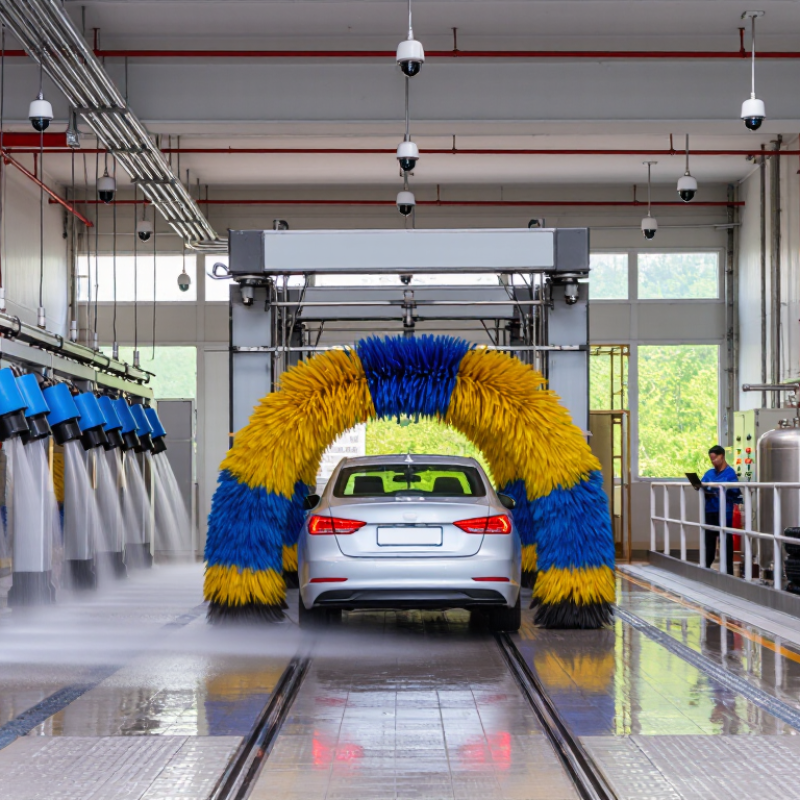
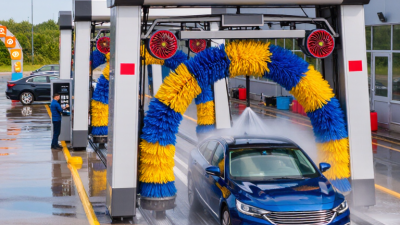
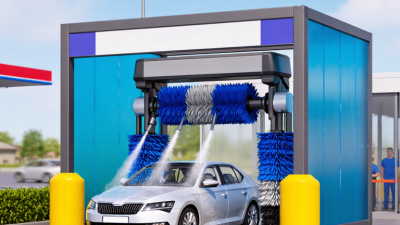
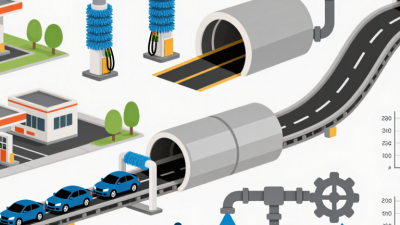
Automated car wash systems combine mechanical cleaning, water management, and digital controls. Their main formats include tunnel systems, in-bay rollover units, and touchless washers. Tunnel equipment moves the vehicle through brushes, arches, dryers, and chemical stations. Rollover units stay in one bay while the gantry travels around the car. Touchless systems use high-pressure water and detergents instead of physical contact.
Core technologies include programmable logic controllers, vehicle-position sensors, variable-frequency drives, and automatic chemical dosing. Modern systems may also use cameras to estimate vehicle size and adjust spray pressure. Water-reclaim units filter and reuse process water, reducing freshwater demand. The International Carwash Association has reported that professional washing can use far less water than driveway washing, which may consume up to 100 gallons per vehicle. Grand View Research also identifies automation, convenience, and water efficiency as major market growth factors. Yet sensors can misread unusual vehicle shapes. No system is perfect.
Tips: Compare throughput, drying quality, reclaim performance, maintenance access, and local service support. Ask for measured water use, not attractive estimates. A reliable system should provide clear fault alerts and safe emergency stops. Operators should test winter performance, chemical residue, and payment reliability before large-scale deployment. A shorter wash cycle is not always better.
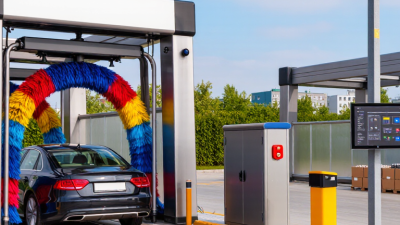
China Top 10 Automated Car Wash Manufacturers?
China’s automated car wash market is expanding through equipment upgrades, labor shortages, and demand for faster vehicle cleaning. Manufacturers commonly produce rollover systems, tunnel lines, touchless units, and compact self-service machines. Many factories combine stainless-steel frames, water pumps, sensors, control cabinets, and payment interfaces under one production plan.
The manufacturing landscape is diverse. Coastal industrial areas often provide stronger access to machining, electronics, and export logistics. Some suppliers focus on high-volume tunnel projects, while others build smaller systems for fuel stations, dealerships, residential developments, and fleet depots. A reliable evaluation should examine factory experience, welding quality, drying performance, water recycling, software stability, and after-sales response. A polished showroom proves little.
Field testing matters more.
Buyers should request operating videos, maintenance records, component specifications, and references from similar climates. Check cleaning results on dusty lower panels, mirrors, wheels, and rear windows. Ask how the machine performs during winter, heavy rain, or unstable water pressure. Certification documents should match the actual model, not an older prototype. No supplier is perfect; even strong equipment may require local adjustment, staff training, and replacement parts.
Tips: Compare total operating cost, not only purchase price. Confirm installation space, drainage design, electrical requirements, detergent compatibility, and spare-part availability. Build a trial period into the contract. A small pilot can expose problems that brochures hide.
China’s registered automobile population increased steadily from approximately 260 million in 2019 to 336 million in 2023. This expanding vehicle base supports long-term demand for automated car-wash equipment, especially in high-density urban areas and commercial service locations. Data source: China Ministry of Public Security annual vehicle-registration statistics.
Selecting China’s top automated car wash manufacturers requires more than comparing prices or catalog images. A credible shortlist should examine operating experience, engineering depth, production capacity, and after-sales reliability. China Association of Automobile Manufacturers reported 31.436 million vehicle sales in 2024. That scale demands equipment built for repeated daily cycles, not occasional demonstrations. Manufacturers should provide verified throughput, drying performance, noise levels, and water-consumption data. Factory audits also matter. Inspect welding quality, electrical protection, spare-parts storage, and final testing records.
Independent evidence strengthens the assessment. Fortune Business Insights estimates that the global car wash systems market will continue growing through this decade, increasing pressure on suppliers to improve efficiency. Buyers should compare water-recycling rates, detergent dosing accuracy, sensor response, and software stability under real site conditions. Safety documentation, installation training, warranty terms, and local service coverage deserve equal weight. A polished showroom is not proof of dependable field performance.
Tips: Request a live demonstration with a dirty vehicle, not an empty machine. Ask for maintenance logs from comparable sites. Check whether claimed capacity includes loading, washing, drying, and exit time. Consider total ownership cost, including electricity, water, brushes, labor, and downtime. No scorecard is perfect. A low purchase price may hide expensive service delays. Conversely, advanced automation may be unnecessary for a small site. The strongest selection method combines audited evidence, operator interviews, and a realistic pilot test before ranking manufacturers.
China’s automated car wash sector is expanding with vehicle ownership and urban service demand. The China Association of Automobile Manufacturers reported 31.44 million vehicle sales in 2024. New-energy vehicles accounted for about 12.87 million units. These figures support demand for faster, touchless, and water-efficient cleaning systems.
The following ten profiles focus on manufacturing capability rather than brand visibility. Profile one represents tunnel-system specialists, offering conveyor speeds suited to busy fuel stations. Profile two focuses on gantry equipment for compact urban sites. Profile three develops touchless high-pressure units. Profile four supplies brush-based systems with controlled contact pressure. Profile five combines washing, drying, and payment modules. Profile six emphasizes water-recycling equipment. Profile seven targets fleet depots with larger throughput. Profile eight provides modular systems for property developers. Profile nine concentrates on intelligent sensors and remote monitoring. Profile ten serves export projects with adaptable electrical configurations.
Grand View Research estimates continued growth in the global car wash services market through 2030. Its analysis links expansion to convenience, labor shortages, and professional cleaning demand. Equipment buyers should examine verified cycle times, pump durability, drying performance, and after-sales response. Water consumption matters too. A 2024 industry review by the International Carwash Association highlights sustainability as a growing purchasing factor.
The ranking is not absolute. Public factory data remains uneven. Some manufacturers publish impressive specifications, but independent installation records are limited. A credible profile should therefore include factory audits, field references, maintenance evidence, and transparent testing results. That gap deserves more attention.
| Rank | Anonymized Manufacturer Profile | Primary Product Focus | Automation Configuration | Typical Throughput | Typical Installation Area | Control and Payment Options | Common Customer Segments | Export Capability |
|---|---|---|---|---|---|---|---|---|
| 1 | Profile 01 | Conveyor tunnel systems | Fully automatic, multi-brush and touchless configurations | 40–80 vehicles per hour | Approx. 35–60 m², excluding queuing space | PLC control, RFID, QR code and card payment support | Fuel stations, dealerships and high-volume sites | Asia, the Middle East, Africa and Latin America |
| 2 | Profile 02 | Touchless high-pressure wash equipment | Automatic gantry with high-pressure water and foam cycles | 8–15 vehicles per hour | Approx. 30–45 m² per bay | Touchscreen, remote monitoring and unattended operation | Service stations, fleet depots and commercial car parks | Southeast Asia, Central Asia and the Gulf region |
| 3 | Profile 03 | In-bay automatic rollover systems | Brush, foam and hybrid rollover models | 6–12 vehicles per hour | Approx. 28–40 m² per bay | PLC, token, QR code and membership-card functions | Independent wash sites, workshops and dealerships | Asia, Eastern Europe and selected African markets |
| 4 | Profile 04 | Compact automatic wash units | Single-bay automated systems for limited spaces | 5–10 vehicles per hour | Approx. 24–35 m² per bay | Touchscreen, coin, QR and mobile-payment integration | Urban petrol stations, apartment complexes and retail sites | Domestic projects and export orders across Asia |
| 5 | Profile 05 | Modular tunnel wash lines | Expandable conveyor line with drying and waxing modules | 50–100 vehicles per hour | Approx. 45–80 m², excluding waiting lanes | Central control cabinet, license-plate recognition and POS integration | Large fuel plazas, transport hubs and fleet operations | Middle East, Southeast Asia and South America |
| 6 | Profile 06 | Water-saving automatic wash systems | Automatic wash with reclaim-water and low-consumption modes | 6–14 vehicles per hour | Approx. 30–50 m² per bay | Programmable wash recipes and remote fault alerts | Environmentally regulated sites and premium wash centers | Asia-Pacific, Europe and the Middle East |
| 7 | Profile 07 | Vehicle detailing and wash automation | Automated exterior wash combined with drying and finishing | 5–12 vehicles per hour | Approx. 35–55 m² per bay | Digital display, preset packages and cashless payment | Detailing centers, dealerships and premium service facilities | Asia, Africa and Latin America |
| 8 | Profile 08 | Heavy-duty and commercial vehicle wash equipment | Automated systems adapted for buses, vans and trucks | 4–10 vehicles per hour | Approx. 60–120 m² per lane | Industrial control, access control and fleet-account billing | Bus operators, logistics companies and municipal fleets | Central Asia, Africa, the Middle East and Southeast Asia |
| 9 | Profile 09 | Self-service and automatic hybrid systems | Multiple bays combining automatic and self-service functions | 4–12 vehicles per hour per bay | Approx. 25–45 m² per bay | Metered payment, QR code, membership and remote supervision | Independent operators and small commercial sites | Domestic installations and selected overseas distributors |
| 10 | Profile 10 | Customized automatic wash projects | Configured-to-order brush, touchless or hybrid solutions | 5–80 vehicles per hour, depending on configuration | Approx. 25–80 m², depending on system layout | Custom PLC logic, site-management software and cashless payment | Real-estate developments, fleet facilities and turnkey projects | Project-based exports to Asia, Africa and the Middle East |
A credible top-ten comparison should measure more than washing speed. Grand View Research reported that the global car wash services market reached about USD 34.6 billion in 2023. This growth increases demand for reliable automated equipment, not just attractive catalogs. I would compare throughput, drying performance, brush materials, water consumption, control systems, and maintenance access. A vehicle should leave clean, dry, and free from visible swirl marks. Small details matter.
Quality evidence separates serious manufacturers from trading companies. ISO 9001 supports consistent production processes, but it does not guarantee perfect equipment. Buyers should request factory acceptance test records, electrical drawings, spare-parts lists, and surface-finish samples. Safety documentation should match the destination market, including machinery risk assessments, emergency stops, and electromagnetic compatibility testing. A polished catalog is not proof. Factory audits remain useful, although they can miss long-term reliability problems.
Export capability needs practical testing. Check container dimensions, local voltage compatibility, installation manuals, remote-support response times, and warranty procedures. Water-recycling performance deserves attention, since regional discharge rules differ. Industry studies from the International Carwash Association show that professional washes can reduce water use compared with uncontrolled home washing, but actual savings depend on equipment settings and maintenance. This is where comparisons become less tidy. Some suppliers report impressive cycle times, yet provide limited evidence for cold climates, hard water, or heavy daily traffic. A balanced ranking should reward transparent data, tested components, and proven after-sales support.